


In the global construction industry, aluminum windows and doors are widely used in residential houses, villas, hotels and commercial buildings. They feature high strength, light weight, good corrosion resistance and flexible customization. Many new overseas buyers are confused about non-thermal break windows, thermal break windows and system windows. Different countries have different climate conditions and local building codes, which set different requirements for product performance and certifications. This article sorts out key knowledge for your reference.
1. Two Main Types: Non-Thermal Break VS Thermal Break Aluminum Profiles
Non-Thermal Break Aluminum Windows & Doors
The inner and outer aluminum frames are connected directly, leading to fast heat transfer. It is cost-effective and suitable for tropical areas with no strict insulation requirements. Common applications are auxiliary buildings, louver windows and garage doors. The regular material is 6063-T5 aluminum alloy. Surface treatments include powder coating and anodizing. PVDF coating is recommended for coastal areas with heavy salt spray.
Thermal Break System Windows & Doors
A PA66 nylon thermal strip is inserted between the inner and outer aluminum profiles to block heat transfer. Equipped with insulated tempered glass and multi-channel sealing gaskets, it achieves excellent air tightness, water tightness, sound insulation and wind resistance. It is popular in Europe, Australia and temperate regions with large temperature difference.
Important note: System windows are not simple assembled products. The profile, hardware, gaskets and drainage structure are developed and tested as a whole for stable performance. Ordinary assembled thermal break windows cannot reach the same performance level.
2. Common Opening Types for Different Overseas Projects
Casement Window: Best sealing and sound insulation, very popular in European and American residential projects.
Sliding Window: No occupied indoor space, good cost performance, high demand in Southeast Asia and Africa.
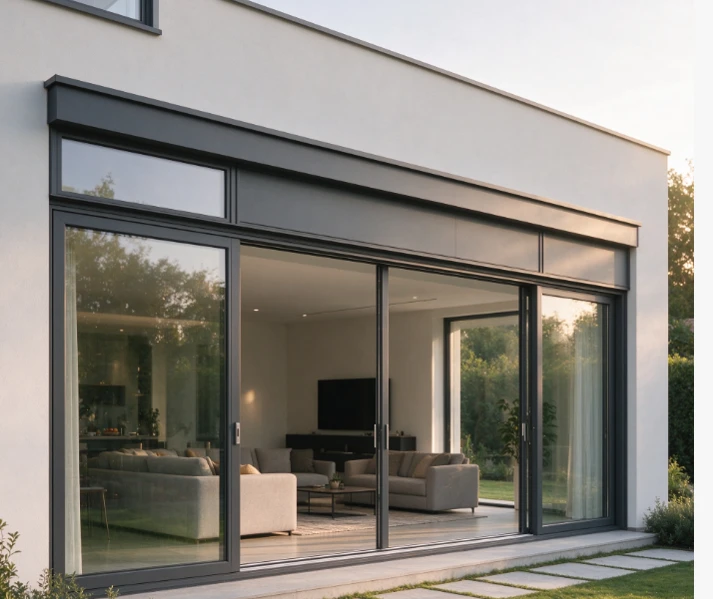
Lift & Slide Door: Large opening and panoramic view, ideal for high-end villas.
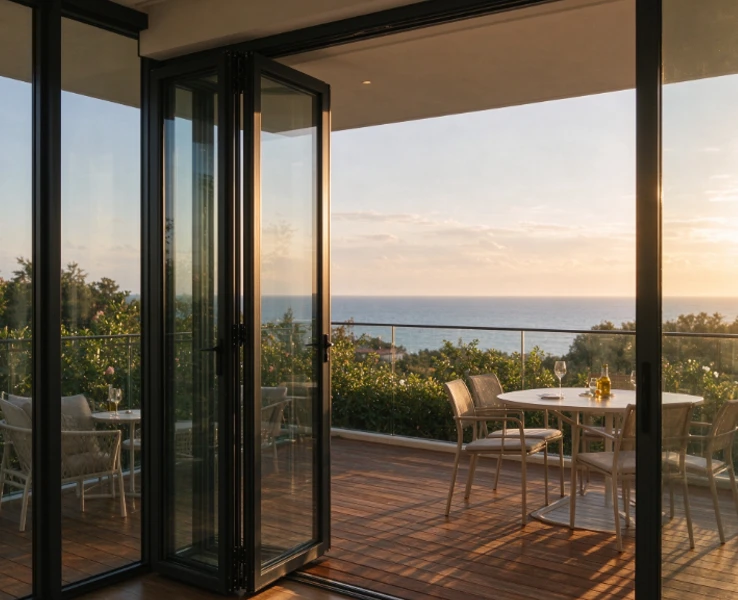
Bi-fold / Folding Door: Full opening without middle mullion, widely used for shops, patios and terraces.
Electric Tilt Windows, Louver Windows & Garage Doors: Custom supporting products.
3. Surface Finishes for Aluminum Profiles (Critical for Weather Resistance)
Powder Coating: Most popular option, rich color options, good weather resistance and competitive price.
PVDF (Fluorocarbon) Coating: Outstanding UV resistance and salt spray resistance, top choice for coastal projects.
Anodizing: Natural metallic texture and high abrasion resistance, limited color choices.
Wood Grain Transfer: Simulated wood appearance for houses pursuing natural style.
4. Glass and Hardware Selection
Glass: Standard configuration is insulated tempered glass such as 6+12A+6. Laminated insulated glass is used for noisy areas. Low-E glass can reduce heat gain for hot regions. Export glass must have tempered marks and test reports. Some countries require local certification.
Hardware: Hinges, lock points, transmission gears and rollers determine the service life. Brand hardware is preferred for premium projects. Anti-corrosion hardware is necessary for salt spray areas. Poor-quality hardware will cause jamming, water leakage and safety issues.
5. Mandatory Certifications for Export Markets
EU Market: CE certification, comply with EN 14351-1 standard for air permeability, water tightness, wind load and sound insulation.
Australia: Follow NCC building code and AS standards with strict wind pressure and thermal performance requirements.
North America: AAMA and NFRC performance certifications.
Middle East, West Africa & South America: Focus on wind resistance, waterproofing and UV resistance. COC certificate may be required for customs clearance in some countries.
Buying tip: Confirm test reports and certificates with your supplier before placing orders to prevent customs detention.
6. Selection Suggestions by Local Climate
✅ Rainy & typhoon-prone coastal areas: Enhanced drainage structure, high water tightness grade, thicker profile wall and PVDF coating.,
✅ Hot & sunny regions: Thermal break frame + Low-E insulated glass to cut air conditioning consumption.
✅ Cold areas with big temperature difference: Thermal break profiles with wide PA66 strips, multi-cavity frame and warm-edge insulated glass.
✅ Islands with heavy salt spray: PVDF full coating + anti-corrosion hardware to avoid aluminum corrosion.
7. Advantages of Chinese Aluminum Window & Door Manufacturers
Factories in China support full-size customization. We can adjust profile structure, colors and hardware according to customers' drawings. Orders are acceptable from small sample sets and single villa projects to large real estate and hotel contracts. We provide drawing optimization, performance test documents and packing solutions, supporting DAP, DDP and other international trade terms.
To sum up, buyers should not only compare unit prices. Local climate, building regulations, certifications and application scenarios must be considered together. Windows with the same appearance can have huge differences in service life and performance due to different thermal structures, glass and hardware. Feel free to send us your project drawings and specifications, we will prepare professional solutions and quotations for you.
