

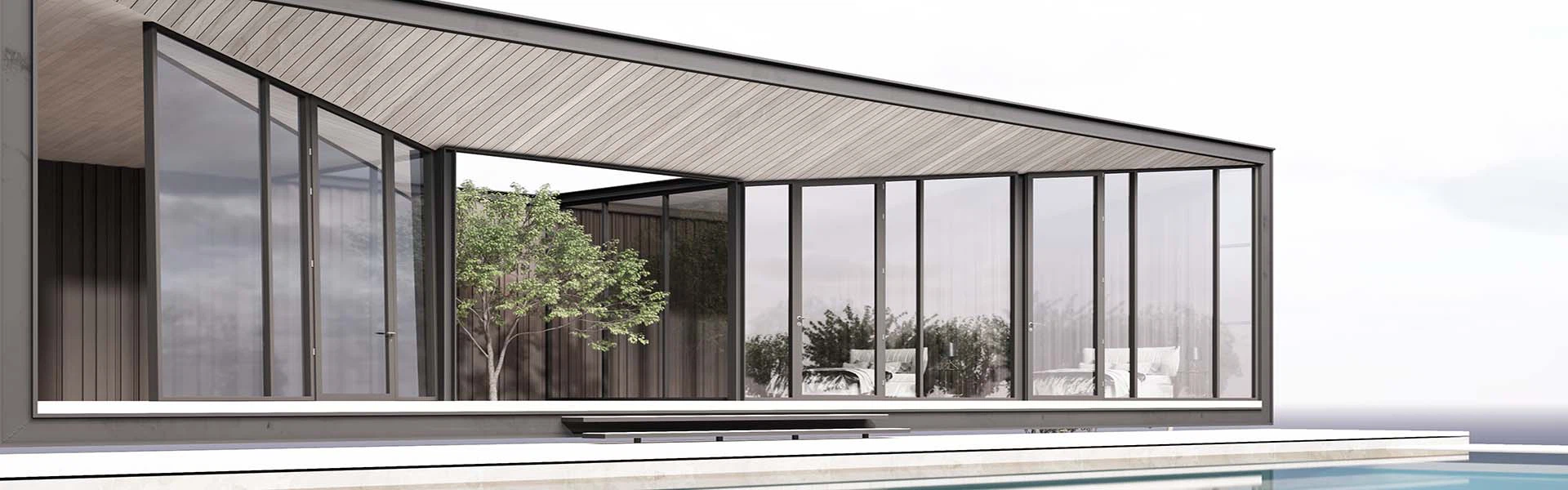
Aluminum Casement Door
What Is Aluminum Casement Door
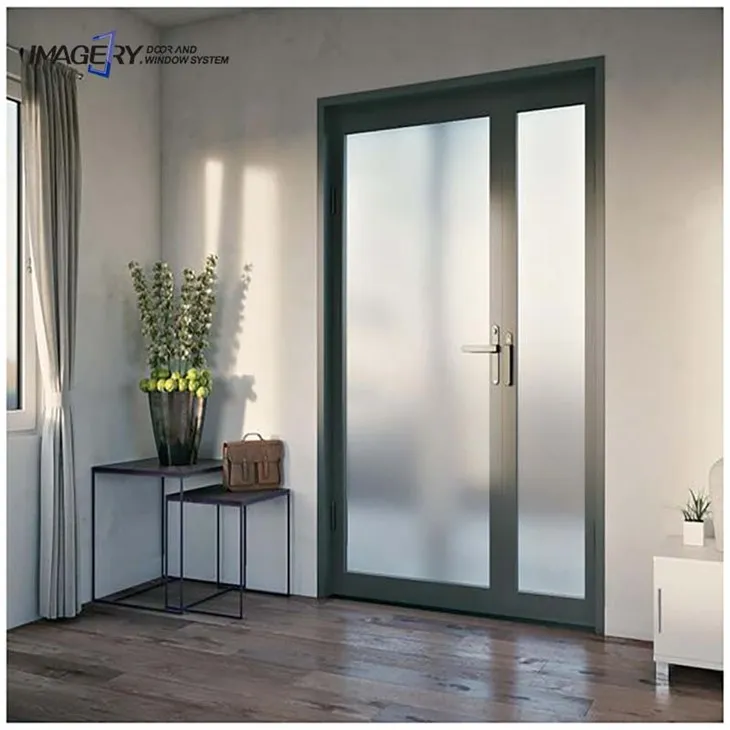
An aluminum casement door is a type of hinged door that opens outward or inward like a window casement. It consists of a frame made from durable aluminum alloy, which provides strength, stability, and resistance to corrosion and weathering. The door panel is connected to the frame with hinges, allowing it to swing open smoothly. Aluminum casement doors are favored for their sleek, modern appearance, energy efficiency, and ease of maintenance, making them a popular choice for both residential and commercial applications. Their design often includes insulating glass panes and weather stripping for improved thermal insulation and sound reduction.
Advantages of Aluminum Casement Door
Durability and strength
Aluminum is a strong and lightweight material, making it an ideal choice for doors. It can withstand heavy impacts and is resistant to dents, scratches, and corrosion. This durability ensures that the door remains in good condition for a longer period, reducing the need for frequent repairs or replacements.
Weather resistance
Aluminum casement doors are designed to withstand extreme weather conditions, such as heavy rain, strong winds, and extreme temperatures. The material's resistance to rust and corrosion makes it suitable for outdoor use, even in areas with harsh climatic conditions.
Easy maintenance
Aluminum doors require minimal maintenance and are easy to clean. They can be wiped down with a damp cloth or hosed down, depending on the level of dirt or debris accumulation. This makes it convenient for homeowners to maintain the cleanliness and appearance of their doors without much effort.
Variety of designs and styles
Aluminum casement doors are available in a wide range of designs and styles, allowing homeowners to choose a door that perfectly complements their home's exterior. From modern and contemporary designs to traditional and classic styles, there is a suitable option for every taste and preference.
Customizability
Aluminum doors can be customized to fit any size and shape of opening, making them a versatile choice for both residential and commercial applications. This flexibility allows for greater creativity and personalization in door design.
Security
Aluminum casement doors are equipped with strong locking mechanisms and security features, making them a safe and secure choice for homes and businesses. The sturdy material and robust construction provide peace of mind against intruders and unauthorized access.
-
![French Doors Aluminum For Houses]() French Doors Aluminum For HousesAluminum alloy casement doors are a type of door whose main frame material is aluminum alloy. They are connected to the door frame through hinges and can be opened either inward or outward. They...read more
French Doors Aluminum For HousesAluminum alloy casement doors are a type of door whose main frame material is aluminum alloy. They are connected to the door frame through hinges and can be opened either inward or outward. They...read more -
![Extremely Narrow Frame Aluminium Casement Doors]() Extremely Narrow Frame Aluminium Casement DoorsThe overall design is simple and elegant, with smooth lines. There are no excessive complex decorations. The combination of narrow frame and invisible hinges, etc., creates an "unframed" visual...read more
Extremely Narrow Frame Aluminium Casement DoorsThe overall design is simple and elegant, with smooth lines. There are no excessive complex decorations. The combination of narrow frame and invisible hinges, etc., creates an "unframed" visual...read more -
![Custom Indoor Aluminum Casement Door With Screen]() Custom Indoor Aluminum Casement Door With Screen1.High quality aluminum profiles are used 2.A variety of different glass configurations 3.Can be matched with different screen doorsread more
Custom Indoor Aluminum Casement Door With Screen1.High quality aluminum profiles are used 2.A variety of different glass configurations 3.Can be matched with different screen doorsread more -
![UltraSlim Aluminum Flush Door]() UltraSlim Aluminum Flush Door1.Sleek Aesthetic Appeal. 2.Exceptional Durability. 3.Smooth Operation.read more
UltraSlim Aluminum Flush Door1.Sleek Aesthetic Appeal. 2.Exceptional Durability. 3.Smooth Operation.read more -
![Modern Aluminum Casement Door]() Modern Aluminum Casement Door1.Compliant with New National Standard with 1.8mm Profile 2.Triple-Pane Insulated Glass with Lower K-Value 3.Integrated Bend EPDM Foam Pressure-Equalizing Sealread more
Modern Aluminum Casement Door1.Compliant with New National Standard with 1.8mm Profile 2.Triple-Pane Insulated Glass with Lower K-Value 3.Integrated Bend EPDM Foam Pressure-Equalizing Sealread more -
![Flat Aluminum Doors With Narrow Bezels]() Flat Aluminum Doors With Narrow Bezels1.Ultra-slim Bezel Design. 2.Standardized 6mm Tempered Glass for Floor-to-Ceiling Clarity & Safety. 3.Specialized Profiles with 2.0mm Thick Walls.read more
Flat Aluminum Doors With Narrow Bezels1.Ultra-slim Bezel Design. 2.Standardized 6mm Tempered Glass for Floor-to-Ceiling Clarity & Safety. 3.Specialized Profiles with 2.0mm Thick Walls.read more -
![Thermal Break Aluminum Casement Door]() Thermal Break Aluminum Casement Door1. Can do circular window, arc window. 2. Aluminum alloy drain hole cover. 3.EPDM isobaric rubber strip.read more
Thermal Break Aluminum Casement Door1. Can do circular window, arc window. 2. Aluminum alloy drain hole cover. 3.EPDM isobaric rubber strip.read more -
![Extremely Narrow Frame Aluminum Casement Bathroom Door]() Extremely Narrow Frame Aluminum Casement Bathroom Door1.Its ultra-narrow frame offers a mere 16mm visible surface. 2.Equipped with standard 6mm tempered glass. 3.Constructed from specialized profiles with a wall thickness of 2.0mm.read more
Extremely Narrow Frame Aluminum Casement Bathroom Door1.Its ultra-narrow frame offers a mere 16mm visible surface. 2.Equipped with standard 6mm tempered glass. 3.Constructed from specialized profiles with a wall thickness of 2.0mm.read more -
![Double Flying Wings Doors]() Double Flying Wings Doors1.Multi-function opening. 2.Special waterproof seal for frame and stick. 3.Patented soundproof leather strip to form multi-chamber heat insulation and noise reduction.read more
Double Flying Wings Doors1.Multi-function opening. 2.Special waterproof seal for frame and stick. 3.Patented soundproof leather strip to form multi-chamber heat insulation and noise reduction.read more -
![Aluminum Swing Door Design]() Aluminum Swing Door Design1.Aluminum swing door design, durable, safe and worry-free first choice. 2.Flat open design, open and close freely, highlighting the beauty of convenient life. 3.Elegant appearance, timeless,...read more
Aluminum Swing Door Design1.Aluminum swing door design, durable, safe and worry-free first choice. 2.Flat open design, open and close freely, highlighting the beauty of convenient life. 3.Elegant appearance, timeless,...read more -
![Aluminum Swing Toilet Door]() Aluminum Swing Toilet Door1. Product specifications are customized according to customer needs 2. A variety of colors for customers to choose 3. Please contact us for other questionsread more
Aluminum Swing Toilet Door1. Product specifications are customized according to customer needs 2. A variety of colors for customers to choose 3. Please contact us for other questionsread more -
![Aluminum Swing Casement Door]() Aluminum Swing Casement DoorThis is a classic aluminum door in our company. Door is an indispensable presence in the home.But it’s also one of those scenes that we often overlook. This product has a good sound insulation and...read more
Aluminum Swing Casement DoorThis is a classic aluminum door in our company. Door is an indispensable presence in the home.But it’s also one of those scenes that we often overlook. This product has a good sound insulation and...read more


Why Choose Us
High quality
Our products are manufactured or executed to a very high standard, using the finest materials and manufacturing processes.
Advanced equipment
A machine, tool or instrument designed with advanced technology and functionality to perform highly specific tasks with greater precision, efficiency and reliability.
Professional team
Our professional team collaborates and communicates effectively with each other, and is dedicated to delivering high quality results. We are capable of handling complex challenges and projects that require our specialized expertise and experience.
Quality control
We have built a professional quality control team to accurately inspect every raw material and every production process.
Customized services
We understand that each customer has unique manufacturing needs. That’s why we offer customization options to cater to your specific requirements.
24H online service
We try and respond to all concerns within 24 hours and our teams are always at your disposal in case of any emergencies.
Types of Aluminum Casement Door
Single hung aluminum casement door
This type of door consists of two sash panels, one of which is fixed while the other is hinged and swings open outward or inward. The single hung version allows for ventilation on one side of the door while still maintaining privacy on the other side.
Double hung aluminum casement door
Similar to the single hung version, but with two hinged panels that swing open independently. This type of door provides maximum ventilation and accessibility, making it ideal for larger spaces or areas that require frequent entry and exit.
Sliding aluminum casement door
Instead of swinging open, sliding casement doors move horizontally along a track. This type of door is space-saving and perfect for areas where there is limited room for a swinging door. It can also be operated smoothly with minimal effort.
Folding aluminum casement door
Folding doors consist of multiple panels that fold in concertina style when opened. This type of door offers a wide opening and is ideal for rooms that require maximum access such as garages, warehouses, or even some living rooms.
Tilt turn aluminum casement door
Tilt and turn doors are unique in that they can be opened in two different ways. The door can swing open like a traditional casement door or tilt inwards at the top to ventilate without opening fully. This type of door is highly versatile and energy-efficient.
Lift slide aluminum casement door
As the name suggests, lift and slide doors are lifted slightly off the floor and then slide horizontally along a track. They offer a smooth and quiet operation, making them ideal for use in noise-sensitive environments.
Inline sliding aluminum casement door
Inline sliding doors have a sleek, modern appearance and are designed to slide horizontally along a concealed track within the door frame. This type of door is perfect for contemporary homes and commercial spaces where a minimalist look is desired.
Pivot hinge aluminum casement door
Pivot hinge doors are hinged at the top and bottom of the door panel, allowing it to pivot open like a traditional door. This type of door is often used in historic or period homes where a more traditional look is required
How to Store Aluminum Casement Door



Cleaning and inspection
Before storage, give the door a thorough cleaning to remove any dirt, debris, or grease. Inspect the door for any scratches, dents, or other forms of damage. Minor issues should be repaired immediately, as leaving them unattended could lead to further deterioration during storage.
Remove hardware
If the door has any hardware such as locks, handles, or weather stripping, remove them carefully. These components can be damaged if subjected to the same conditions as the door itself during storage. Store them in a safe place where they won't get lost or damaged.
Flat storage
Aluminum casement doors should be stored flat to prevent warping or bending. Lay the door on a level surface covered with protective padding, such as foam or a thick blanket, to keep it from making direct contact with the floor. Ensure that the hinges are supported and not under any tension that could cause them to deform.
Separate panels
If the door consists of multiple panels, separate them to avoid placing undue pressure on the hinges. Store each panel separately, ensuring they are also laid flat.
Protection from elements
Cover the door(s) with a breathable tarp or heavy-duty plastic to protect against dust, moisture, and uv rays. Make sure the covering is secure but not too tight, as this could distort the door's shape.
Proper environment
Store the door in a dry, temperature-controlled environment away from extreme heat or cold. A garage, shed, or interior room can often serve as appropriate storage spaces. Avoid attics and basements where temperature fluctuations and humidity levels can be high.
Organization
Keep the door organized with other stored items, ensuring there is enough space for air circulation. Stack any additional panels or components neatly and evenly to prevent leaning and potential warping.
Regular inspection
Even with proper storage, it's a good idea to occasionally check on the door's condition. Look for signs of corrosion, warping, or any other changes that might have occurred.
Application of Aluminum Casement Door
Residential applications
In residential settings, aluminum casement doors are often used to connect indoor living spaces with outdoor decks or gardens. The doors swing wide open, creating a seamless transition between the two areas, perfect for entertaining guests or enjoying the outdoors.
Commercial applications
In commercial environments, aluminum casement doors are commonly used to partition office spaces while maintaining an open and airy feel. The doors can be easily opened to accommodate meetings or closed for privacy.
Retail stores
Retail stores often utilize casement doors to welcome customers and showcase products. The doors can be designed with large glass panes to maximize visibility and entice passersby to enter.
Public buildings
Hospitals, schools, and government buildings frequently incorporate aluminum casement doors due to their durability and ease of maintenance. These doors can handle high foot traffic and are suitable for accessibility needs, such as wheelchair users.
Precautions When Using Aluminum Casement Door
Professional installation
It is highly recommended to have your aluminum casement door professionally installed. Improper installation can lead to structural issues, poor seals, and even accidents.
Level and plumb
Ensure that the door frame is level and plumb during installation. This will prevent binding and ensure smooth operation over time.
Secure fastening
Use appropriate fasteners designed for the material and climate conditions. Over time, inadequate fastening can result in door misalignment or detachment.
Handle with care
Treat your casement door gently, especially when opening and closing it. Forcibly pushing or pulling can damage the hinges or operating mechanism.
Cleaning
Use mild, non-abrasive cleaners when cleaning your aluminum door. Harsh chemicals can damage the finish or strip protective coatings.
Lubrication
Occasionally apply a silicone-based lubricant to the moving parts of the door (hinges, cranks, etc.). This helps maintain smooth operation and reduces wear.
Regular inspection
Perform regular inspections for loose hardware, warping, or signs of damage. Promptly address any issues to avoid further deterioration.
Check for leaks
Inspect the door for leaks, especially around the frame and seals. Water infiltration can lead to rot, mold, and structural problems.
Protect from impact
Shield your casement door from impacts. Dents or other damages can compromise the integrity of the door and its insulation properties.
Keep clearances
Maintain clearances around the door to prevent accidents. Ensure that there is enough space for the door to swing open without hitting furniture or people.
How Do I Choose the Right Aluminum Casement Door
Material quality
The quality of the aluminum alloy used in the door frame is paramount. Look for marine-grade aluminum or other high-quality alloys that offer superior strength and resistance to corrosion. Inquire about the thickness of the aluminum profile as thicker profiles generally provide better structural integrity.
Glass options
Glass units are a significant component of casement doors. Consider the type of glazing (single, double, or triple pane) for optimal insulation and noise reduction. Choose glass with a low emissivity (low-e) coating to reflect heat back into the room in the winter and keep heat out in the summer.
Thermal break
To enhance energy efficiency, look for doors with a thermal break—an insulating material placed in the frame to minimize heat transfer. This is particularly important in climates with extreme temperatures.
Hardware and hinge quality
The hardware and hinges should be durable and easy to operate. Stainless steel or brass hardware is typically more resistant to corrosion and wear. Ensure the hinges are adjustable for alignment and are capable of supporting the weight of the door.
Security features
Evaluate the security features of the door, such as multi-point locking mechanisms that engage with the frame at several points, providing better protection against burglary.
Weatherstrip and sealing
Effective weatherstripping and seals are crucial for preventing drafts, water infiltration, and sound transmission. Inspect the door for adequate sealing around the frame, sash, and hardware.
Size and configuration
Measure your doorway accurately to determine the appropriate size for your casement door. Consider whether you need a single door, a pair of doors, or a multi-panel configuration. Make sure the door will fit properly and doesn’t obstruct any adjacent structures or pathways.
Maintenance requirements
Consider the ongoing care and maintenance required for the door. While aluminum is relatively low-maintenance, different finishes may require different cleaning procedures. Anodized aluminum is more durable than painted surfaces, which can chip or scratch over time.
Production Methods of Aluminum Casement Door
Raw material extraction and processing
The journey of an aluminum casement door begins with the extraction of bauxite ore, the primary source of aluminum. It is processed into alumina, which is then electrolyzed in a smelter to produce pure aluminum. This aluminum is further cast into various shapes like billets, which serve as the starting point for extrusion.
Extrusion
The extrusion process is pivotal in shaping the aluminum for the door frames. A heated billet is forced through a steel die with the desired cross-section under high pressure. The aluminum takes the shape of the die, resulting in a continuous profile that can be cut to the required length for door frames and sashes.
Anodizing or coating
Once the profiles are cut to size, they undergo surface treatments to enhance their appearance and protect against corrosion. Anodizing involves electrochemically growing aluminum oxide on the surface of the metal, creating a hard, durable finish. Alternatively, the profiles might be powder-coated, where a free-flowing, dry powder paint is applied and then cured under heat to form a tough finish.
Hardware insertion
Precision hardware, such as hinges, locks, and handles, is inserted into the door frame at this stage. These components are chosen based on their durability, ease of operation, and compatibility with the door's design. Hardware insertion is often done using specialized machinery to ensure proper alignment and a secure fit.
Glass installation
Glass units are installed into the sashes of the door. These units can be single-pane, double-pane, or triple-pane, depending on the desired insulation properties. The glass is usually sealed with a rubber or vinyl weatherstrip to prevent air and water infiltration.
Insulation and sealing
Thermal breaks, which are insulating materials, are integrated into the door frames to reduce heat transfer and improve energy efficiency. Weatherstripping is added around the perimeter of the door to block drafts and provide a tight seal when the door is closed.
Assembly
The sashes and frames are assembled to form complete casement doors. Skilled workers ensure that all components are correctly aligned and securely fastened.
Quality control
Throughout the production process, quality control checks are performed to ensure that the doors meet strict standards for dimensions, strength, and finish. Doors are inspected for structural integrity, hardware functionality, and aesthetic consistency.
Frame
The frame is the structural backbone of the door, providing support and a mounting surface for the sash and hardware. It is typically made from strong, lightweight aluminum extrusions that are joined together with corner keys or welding.
Sash
The sash is the moving part of the casement door that swings open and closed. It is also made from aluminum extrusions and is fitted with a weathertight seal to prevent air and water infiltration. The sash may contain one or more panes of glass, depending on the design and intended use of the door.
Hinges
Hinges are the mechanical joints that connect the sash to the frame, allowing the door to swing open and closed. High-quality hinges are essential for maintaining the door’s smooth operation and durability over time. They are typically made from stainless steel or brass to resist corrosion and wear.
Operating mechanism
The operating mechanism allows the user to open and close the casement door. This may include a crank handle, lever handle, or push/pull mechanism, depending on the design of the door. The operating mechanism is connected to a gearbox that rotates the sash around the hinges, opening or closing the door.
Locks and latches
Locks and latches provide security by preventing unauthorized access to the home or building. They are typically integrated into the door’s hardware and may include deadbolts, keyed locks, or thumbturn latches. Some casement doors may also feature multipoint locking systems that engage with the frame at multiple points, enhancing security and weathertightness.
Glass panels
Glass panels are commonly incorporated into casement doors to allow natural light to enter the space. They are made from tempered glass, which is stronger and safer than regular glass. The glass may be coated or treated with special coatings to improve energy efficiency and reduce glare.
Weatherstripping
Weatherstripping is a critical component of casement doors, as it prevents air and water infiltration while reducing energy loss. It is typically made from foam, rubber, or vinyl and is installed around the perimeter of the door to create a tight seal when the door is closed.
Hardware accessories
Finally, a variety of hardware accessories may be included with an aluminum casement door to enhance its functionality and appearance. These may include door stops, threshold plates, kick plates, and decorative grilles or grids.
Aluminum casement doors are known for their durability, energy efficiency, and sleek design, making them a popular choice for modern homes and commercial buildings. The operation of the door itself and the environmental factors outside the door. When the door is opened or closed, the hinges and hardware may produce some noise, particularly if they are not of high quality or have become worn over time. Additionally, windy conditions can cause the door to rattle or bang against its frame, especially if the weatherstripping has deteriorated or the door is not properly adjusted. With proper installation and maintenance, the noise level of an aluminum casement door can be minimized. High-quality hardware is crucial for minimizing noise during operation. Hinges and locks should be made from durable materials such as stainless steel or brass, which are resistant to wear and tear. Additionally, the door should be installed squarely and plumbly to ensure a smooth operation with minimal noise. Weatherstripping is another important factor in minimizing noise associated with aluminum casement doors. This strip of material seals the gap between the door and its frame, preventing air and water infiltration as well as reducing noise caused by wind or traffic. Regular inspection and replacement of weatherstripping can help maintain the door's performance and reduce noise.Furthermore, the insulation properties of the door can also impact noise levels. Aluminum frames are inherently conductive, so it's important to choose an aluminum casement door with adequate insulation, such as double-paned glass or insulated frames, to reduce sound transmission.
Are There Any Specific Maintenance Requirements for Aluminum Casement Doors?
Regular cleaning
Dirt, debris, and other environmental pollutants can accumulate on the surface of aluminum casement doors. It is important to clean them regularly using a mild detergent and warm water. A soft cloth or sponge should be used to avoid scratching the door’s surface. Special care should be taken with the glass panels, using glass cleaner and a lint-free cloth.
Checking hardware
All hardware components, including hinges, locks, and handles, should be checked periodically for signs of wear or damage. Loose hardware can cause the door to stick or bind, so it should be tightened promptly. If any hardware is damaged, it should be replaced immediately to maintain the door’s functionality and security.
Inspecting weatherstripping
Weatherstripping is crucial for keeping out drafts and water. Over time, weatherstripping can become compressed or torn, losing its effectiveness. Inspect the weatherstripping regularly and replace it if it appears worn or damaged. Properly functioning weatherstripping helps ensure energy efficiency and keeps the interior of the home dry and comfortable.
Lubricating moving parts
Moving parts of the door, such as the hinges and operating mechanisms, benefit from occasional lubrication. Use a dry silicone spray or teflon lubricant to keep these parts moving smoothly. Avoid using oil-based lubricants, as they can attract dirt and dust.
Repairing damaged panels
If the glass panels in the door are damaged, they should be repaired or replaced as soon as possible. Tempered glass is designed to break into small, relatively harmless pieces, but even so, broken glass poses a risk. It is also important to maintain the integrity of the door’s thermal and weather barriers.
Protecting against corrosion
Although aluminum is resistant to corrosion, it can still be affected by certain environmental factors, such as salt air near the ocean. To protect the door from corrosion, it should be washed with a mild, non-abrasive cleaner and rinsed thoroughly after exposure to harsh conditions.
Seasonal checkups
Seasonal changes can have an impact on the operation of doors. It is advisable to perform a seasonal checkup in spring and autumn to ensure that the door is operating smoothly and that all components are in good condition. Adjustments may need to be made to accommodate expansion and contraction of the aluminum caused by temperature fluctuations.
Our factory
Shandong Imagery Aluminum Technology Co., LTD. has been established in 2013 and had a registered capital of RMB 30 million yuan, which is one of the China's largest manufacturers of windows and doors, with the total high-quality windows and doors,curtain walls sales volume of 600,000 square meters per year. Shandong Imagery Aluminum Technology Co., LTD is affiliated to Shandong Jinxiang Aluminum Group ,which has been founded in 1999 and had a registered capital of RMB 160 million yuan.

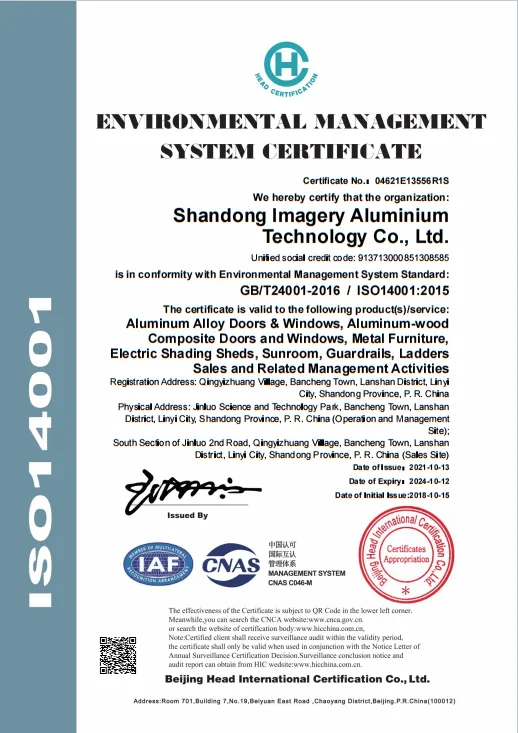
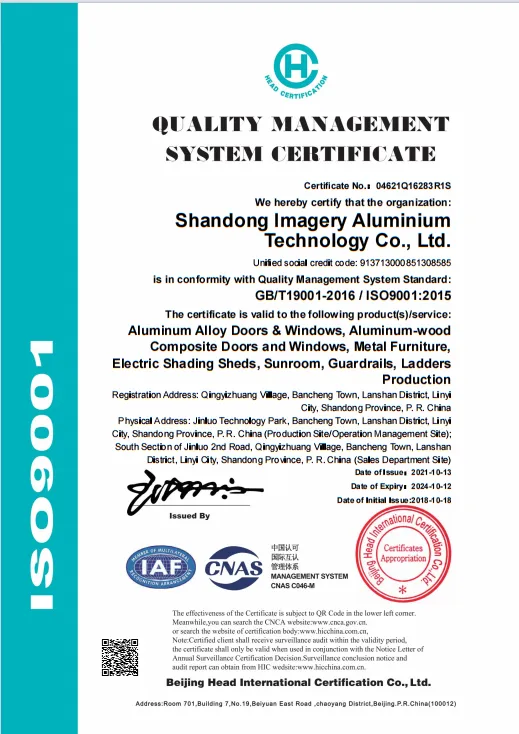
Certificate

FAQ
We're well-known as one of the leading aluminum casement door manufacturers in China. Please feel free to wholesale discount aluminum casement door made in China here and get free sample from our factory. Also, customized service is available.
Aluminum Casement Door, Aluminum Frame Glass Casement Door, Aluminum Swing Casement Door